
New video by BBC News on YouTube
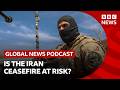
Why Trump and Iran both want to 'win' a ceasefire deal | Global News Podcast
The state of ceasefire talks between the US and Iran has been thrown into question, after American forces launched fresh strikes on Iranian missile sites and minelaying boats on Monday. Washington has said the strikes were carried out in self-defence. Iran's Islamic Revolutionary Guard Corps said it had downed a US drone and fired at a fighter jet that entered Iranian airspace, adding that it had the right to retaliate against ceasefire violations. The BBC's diplomatic correspondent James Landale tells us that he expects the negotiations to continue, as both the US and Iran want a deal. The sticking point, he says, is that each needs a way to claim victory. Currently on the table is a one-page "memorandum of understanding" which reportedly involves a 60-day ceasefire extension, the reopening of the Strait of Hormuz, and a plan for further negotiations over Iran's nuclear programme. President Trump has now said that any agreement with Iran should also require more countries, including Saudi Arabia and Turkey, to join the Abraham Accords - the US-brokered agreements intended to normalise relations between Israel and Muslim-majority states. New episodes of the Global News Podcast are published twice a day. You can listen here: https://ift.tt/EYx638i And you can find more of our YouTube episodes here: https://ift.tt/xMhwDQJ Subscribe to our channel here: https://bbc.in/bbcnews For the latest news download the BBC News app or visit BBC.com/news #BBCNews #iran #trump #straitofhormuz #iranwar 00:00 Introduction 01:52 What's the deal on the table? 02:59 Will the strikes derail ceasefire talks? 03:59 Adding the Abraham Accords to an Iran deal 05:37 Trump under pressure from Republicans 07:16 How Israel and Lebanon could affect talks 08:32 What happens next?
View on YouTube
The state of ceasefire talks between the US and Iran has been thrown into question, after American forces launched fresh strikes on Iranian missile sites and minelaying boats on Monday. Washington has said the strikes were carried out in self-defence. Iran's Islamic Revolutionary Guard Corps said it had downed a US drone and fired at a fighter jet that entered Iranian airspace, adding that it had the right to retaliate against ceasefire violations. The BBC's diplomatic correspondent James Landale tells us that he expects the negotiations to continue, as both the US and Iran want a deal. The sticking point, he says, is that each needs a way to claim victory. Currently on the table is a one-page "memorandum of understanding" which reportedly involves a 60-day ceasefire extension, the reopening of the Strait of Hormuz, and a plan for further negotiations over Iran's nuclear programme. President Trump has now said that any agreement with Iran should also require more countries, including Saudi Arabia and Turkey, to join the Abraham Accords - the US-brokered agreements intended to normalise relations between Israel and Muslim-majority states. New episodes of the Global News Podcast are published twice a day. You can listen here: https://ift.tt/EYx638i And you can find more of our YouTube episodes here: https://ift.tt/xMhwDQJ Subscribe to our channel here: https://bbc.in/bbcnews For the latest news download the BBC News app or visit BBC.com/news #BBCNews #iran #trump #straitofhormuz #iranwar 00:00 Introduction 01:52 What's the deal on the table? 02:59 Will the strikes derail ceasefire talks? 03:59 Adding the Abraham Accords to an Iran deal 05:37 Trump under pressure from Republicans 07:16 How Israel and Lebanon could affect talks 08:32 What happens next?
View on YouTube


No comments